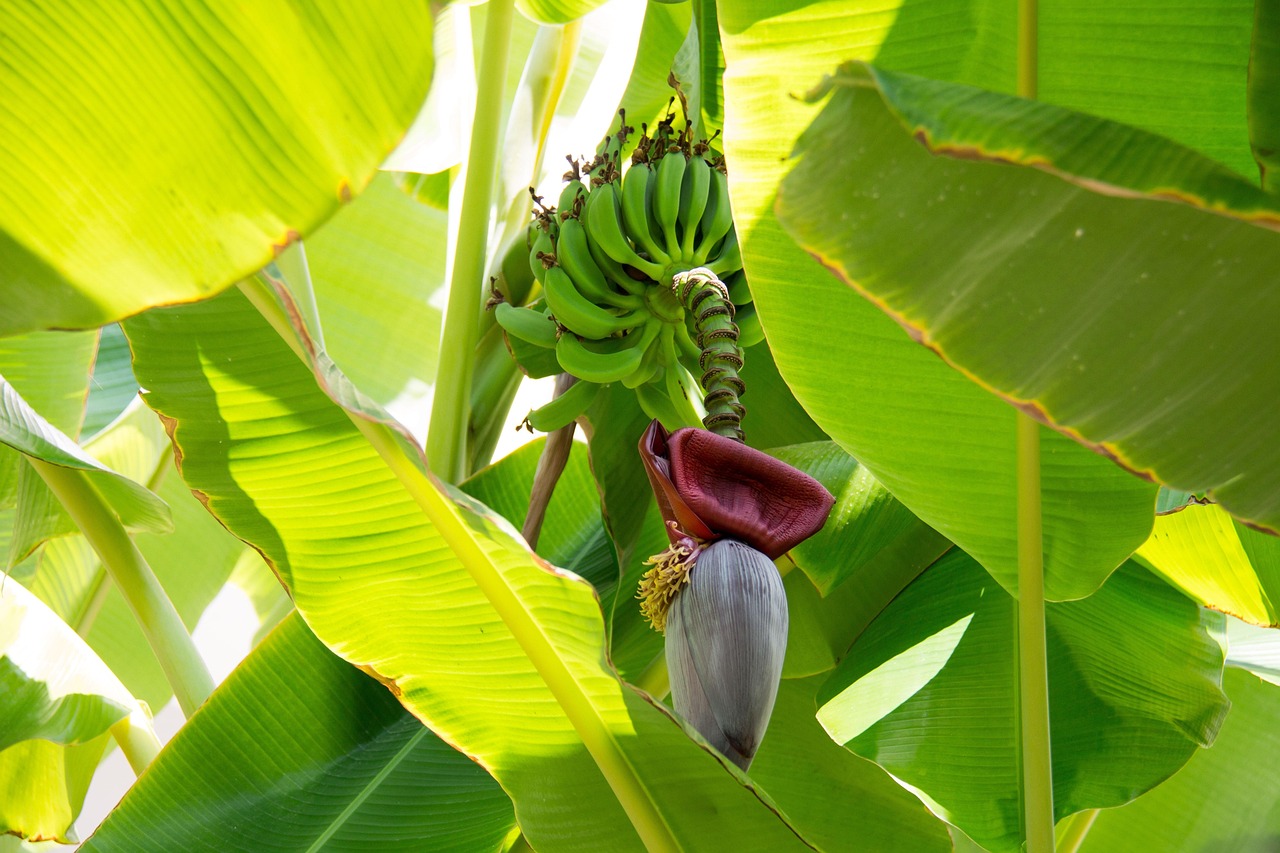
The banana plant is one of the most familiar plants in tropical and subtropical regions. Its large green leaves, rapid growth, and clusters of sweet fruit make it an important part of gardens, farms, and food cultures around the world. Although people often call it a banana tree, it is actually a large herbaceous plant, not a true tree. This is because its main stem is not made of woody tissue like the trunk of a tree.
Bananas are enjoyed in many forms, from fresh fruit eaten as a quick snack to ripe bananas used in desserts, smoothies, breads, and other recipes. Beyond the fruit, the banana plant itself has many interesting features that make it a fascinating member of the plant kingdom.
Botanical Insights About the Banana Plant
Before looking at the fruit, it is useful to understand the botanical identity of the banana plant.
Common Name: Banana
Botanical Name: Musa species
Family: Musaceae
Order: Zingiberales
Genus: Musa
Kingdom: Plantae
Plant Type: Large herbaceous flowering plant
Unlike woody trees, banana plants have a soft, water-rich structure. Their apparent trunk is called a pseudostem. It is formed by the tightly packed bases of large leaves growing around one another.
Depending on the variety and growing conditions, a banana plant can reach several metres in height. Its broad leaves give it a distinctly tropical appearance.
What Does a Banana Plant Look Like?
A banana plant is easy to recognize because of its enormous, elongated leaves. The leaves are usually bright to deep green and can grow quite large. Their broad surface allows the plant to capture sunlight efficiently, supporting its rapid growth.
The pseudostem is generally green or greenish-yellow and may have darker markings. Although it looks like a tree trunk from a distance, it remains soft rather than becoming hard and woody.
As the plant matures, it produces a flowering structure known as an inflorescence. From this structure, rows of bananas gradually develop into a familiar bunch.

How Do Bananas Grow?
The growth of a banana plant is quite different from that of many fruit trees. A banana plant can grow quickly when it receives sufficient warmth, moisture, sunlight, and nutrients.
After reaching maturity, the plant produces a large flower cluster. The individual fruits develop in groups known as hands, with each individual banana sometimes referred to as a finger.
As the bananas develop, they are usually green and firm. With time, they become larger and eventually change color as they ripen. Depending on the variety, ripe bananas may develop yellow, reddish, or other shades.
After producing its main bunch of fruit, the original plant completes its life cycle. New shoots, often called suckers or pups, grow from the underground base and can develop into new banana plants.
Banana Plant and Its Tropical Environment
Banana plants generally thrive in warm environments. They grow particularly well in tropical and subtropical regions where temperatures remain suitable for much of the year.
Good soil drainage is important because banana plants require regular moisture but do not perform well when their roots remain in waterlogged soil for long periods. Plenty of sunlight also supports healthy leaf and fruit development.
Strong winds can sometimes damage banana leaves because their broad surfaces are easily torn. Even when leaves become split, however, the plant can continue growing under suitable conditions.
Different Types of Bananas
Not all bananas are exactly alike. There are many cultivated varieties, each with differences in size, color, texture, flavor, and use.
Some bananas are mainly eaten fresh when they become ripe and sweet. Others are better suited to cooking and may remain firmer even when mature. Plantains are a well-known example and are widely used in cooked dishes.
The diversity of bananas means that the word “banana” represents much more than one particular fruit. Different varieties have become closely connected with the food traditions of the regions where they are grown.
Bananas in Everyday Food
Bananas are among the most convenient fruits to eat. Their natural protective peel makes them easy to carry, and ripe bananas can be eaten without preparation.
They are commonly added to breakfast bowls, fruit salads, smoothies, desserts, and baked foods. Mashed ripe bananas can also be used in recipes such as banana bread, pancakes, and cakes.
Less-ripe bananas and plantains are frequently cooked rather than eaten like sweet dessert fruit. They can be boiled, steamed, fried, baked, or incorporated into savory dishes, depending on local culinary traditions.
Uses of the Banana Plant
The banana plant has value beyond its fruit. In many places, banana leaves are used traditionally for wrapping, serving, or cooking food. Their large size makes them useful for covering food and creating natural serving surfaces.
Different parts of the plant have also been used in traditional practices and local crafts. The fibers obtained from certain banana plants can be used for making ropes, textiles, mats, and other materials.
These uses demonstrate how a single plant can become part of everyday life in many different ways.
Caring for a Banana Plant
Growing a banana plant at home can be rewarding when the basic requirements are provided. It generally prefers a warm location with plenty of sunlight and consistently moist but well-drained soil.
Regular watering can help support its large leaves and rapid growth, particularly during dry periods. Adding suitable organic matter to the soil can also support healthy development.
Because banana plants can become large, they need enough space for their leaves and roots. Removing severely damaged or dried leaves can help keep the plant tidy and allow new growth to develop.
The Natural Story of the Banana Plant
The banana plant is a wonderful example of how appearances can be misleading in nature. What looks like a small tropical tree is actually a giant herb with a soft pseudostem made from tightly packed leaf bases.
From its enormous leaves to its hanging flower and developing fruit bunch, each stage of the banana plant has a distinctive role in its life cycle. Its fruit has become an important food in many parts of the world, while its leaves and fibers have found practical uses in different cultures.
Whether growing in a home garden or across a large plantation, the banana plant adds a strong tropical character to its surroundings. Learning about how it grows makes the familiar banana more than just a fruit—it becomes part of a fascinating story of plants, agriculture, food, and nature.
You may also like our Handwritten YouTube Vidoe’s Click Here.
You may also like our Handmade Crafts and Gifts Shop Now.