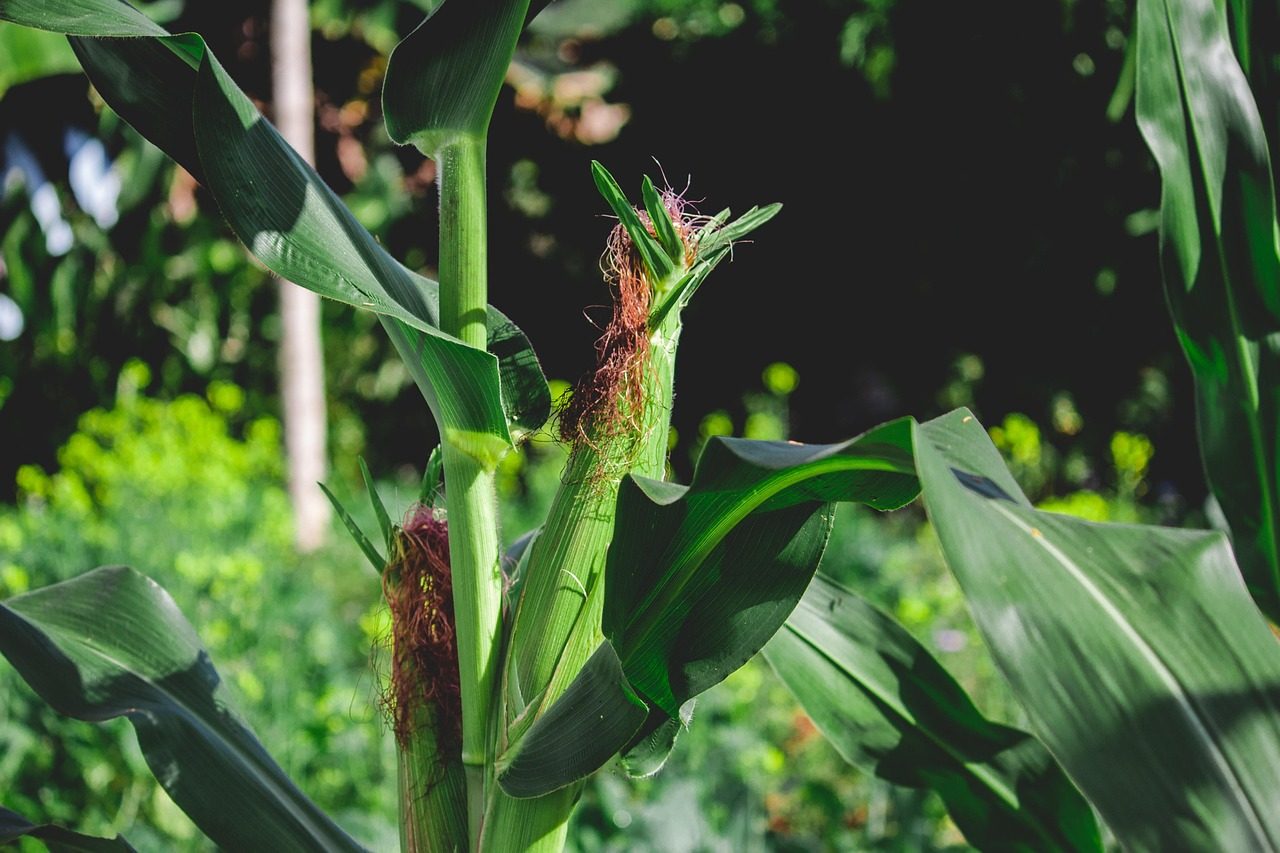
Maize (*Zea mays*), commonly known as corn in several parts of the world, is far more than an agricultural staple. It is a botanical masterpiece of evolutionary adaptation and human selection. Belonging to the grass family Poaceae, maize has transitioned from a wild, obscure Mexican grass into the world’s most produced grain by weight. Understanding the intricate botanical details of this plant reveals why it remains a cornerstone of global food security, industrial manufacturing, and bioenergy production.
Taxonomic Classification and Evolutionary Origin
Maize belongs to the genus *Zea* within the family Poaceae (Gramineae). Its scientific name, *Zea mays* L., reflects its long-standing connection to human civilization. Archaeological and genetic evidence reveals that modern maize was domesticated approximately 9,000 years ago from a wild grass called teosinte (*Zea mays ssp. parviglumis*) in the Balsas River Valley of southwestern Mexico.
The transformation from teosinte to modern maize is one of the most dramatic evolutionary shifts guided by human intervention. While teosinte produces tiny, hard-shelled spikes with only 5 to 12 grains, modern maize yields massive ears containing hundreds of exposed, easily harvestable kernels. Despite these structural differences, the two plants remain genetically similar enough to produce fertile hybrids.
Anatomical and Morphological Structure
The physical architecture of the maize plant is optimized for rapid growth, structural integrity, and efficient nutrient transport.
1. The Root System
Maize features a complex, adventitious root system categorized into three distinct types:
- Seminal Roots: Active during early growth, emerging directly from the seed.
- Nodal (Crown) Roots: Formed from nodes below the soil surface, acting as the primary system for water and nutrient absorption.
- Brace (Prop) Roots: Emerging from aerial nodes above the ground, these roots provide essential physical stability to the tall, top-heavy stalk, preventing lodging during heavy winds.
2. The Stem (Culm)
Towering up to an astonishing 3 meters (10 feet) or more in a single growing season, the maize plant is a true marvel of natural engineering. Its secret lies in its sturdy, upright stalk—a robust cylinder of alternating nodes and internodes. Unlike the hollow stems of bamboo or wheat, the interior of a maize stalk is packed solid with a soft, spongy pith. This dense core houses a high-speed superhighway of vascular bundles, rapidly channeling water, vital minerals, and sugary fuel throughout the plant to power its explosive growth.
3. The Foliage
Maize leaves are arranged alternately along the stem. Each leaf consists of a sheath wrapping around the stem, a collar-like ligule, and a broad, flat blade with parallel venation. The leaf surface is equipped with bulliform cells that roll inward during drought conditions, reducing transpiration and preserving moisture.
Unique Reproductive Biology of Zea mays
Unlike many other cereal crops that are self-pollinating and hermaphroditic, maize is monoecious. This means a single plant houses separate male and female reproductive organs, a characteristic that promotes cross-pollination.
- The Male Inflorescence (The Tassel): Located at the apex of the stalk, the tassel consists of a main spike and several lateral branches containing spikelets. These spikelets release millions of pollen grains, which are carried by the wind (anemophilous pollination).
- The Female Inflorescence (The Ear): Positioned at the leaf axils, the ear is a modified spike. The central axis (the cob) holds paired spikelets, each producing a kernel when fertilized.
- The Silks: Emerging from the tip of the husks, these long, thread-like structures are the styles and stigmas of the female flowers. Each individual silk is connected to a single ovule. When a pollen grain lands on a sticky silk, it germinates, growing a pollen tube down the length of the silk to fertilize the ovule, eventually forming a kernel.
Physiological Mechanisms: The C4 Photosynthetic Pathway
One of the main reasons for the exceptional productivity of maize is its use of C4 photosynthesis. Unlike C3 plants (such as wheat and rice), C4 plants have a specialized leaf anatomy (Kranz anatomy) that physically separates light-dependent reactions from carbon fixation.
This adaptation allows maize to concentrate carbon dioxide around the enzyme RuBisCO, virtually eliminating the energy-wasting process of photorespiration. Consequently, maize is highly efficient at photosynthesizing under high temperatures, intense sunlight, and limited water availability, yielding more biomass per unit of water and nitrogen than most other crops.
Conclusion and Key Botanical Takeaways
The maize plant is a marvel of nature and human ingenuity. Its unique structural features, monoecious reproductive system, and C4 photosynthetic pathway make it one of the most efficient converters of solar energy on the planet. For agronomists, botanists, and global agricultural networks, understanding the biological mechanics of maize is crucial as we adapt our agricultural systems to face changing climates and growing global demands.
You may also like our Handwritten YouTube Vidoe’s Click Here.
You may also like our Handmade Crafts and Gifts Shop Now.